Focus · Pick one next step
Read at your own pace or go straight to a tool. Close anything you no longer need.
A podcast by Hannibal Pineda
The coffee’s on me. Let’s get uncomfortable.
Ever come up with the perfect reply in the shower, two days after an argument? I’m interested in what was hard to say when the other person was right there.
If something keeps circling in your mind, we can start there.

Stay a moment
How are you doing today?
Pick the sentence that feels closest to where you are. Each path starts with a check-in, explains what might be happening, and gives you a few exercises and another check-in. What you write stays on your screen.
If you’re in immediate danger, get urgent help.
Toolbox
Something you can do about it.
Fifteen exercises to try right here, with step-by-step directions and before-and-after check-ins. Pick any one. There’s no pep talk to sit through.
Download the exercise handouts
Your record
Keep track of how you felt before and after each path. You can see it on this device. Come back to it on the days your brain tells you nothing helps.
Make sense of what you feel
You’re not overreacting. There’s an explanation.
Eight quick reads. Understanding what your brain is doing can make it feel less frightening. Each ends with something you can try.
Mi sano juicio · The podcast
One candid conversation a week.
There are things you learn to say under your breath. You checked again. You miss someone you don’t want back. Everyone tells you what to do, and you still can’t find someone to talk to. I made Mi sano juicio so we could stay in those conversations a little longer.
What will you find?
- A real-life question. The kind you Google at two in the morning.
- What we know about it. The way you’d explain it to a friend.
- Something to practice. Small, specific, and doable this week.
How I put each episode together
What I want for you
I want you to find words for what you’re going through, questions that help you look at it, and one step you can take today. I want you to be able to ask someone to stay without first having to defend your right to feel this way.
How we work
Every episode starts with a scene. We separate what we feel, what we know, and what we’re still interpreting. When I bring up a study, I’ll tell you what it measured and which questions are still open. Then we take it back into everyday life with a question, a conversation, or a practice you can try at your own pace.
Where we’re going
I want this to grow into a table you can come back to when you run out of words. The show opens the conversation. The book, Me gustas, pero tengo cosas que hacer, lets you return to it in your own time. Here you can try something now, or share your story privately if you ever feel like it.
The book
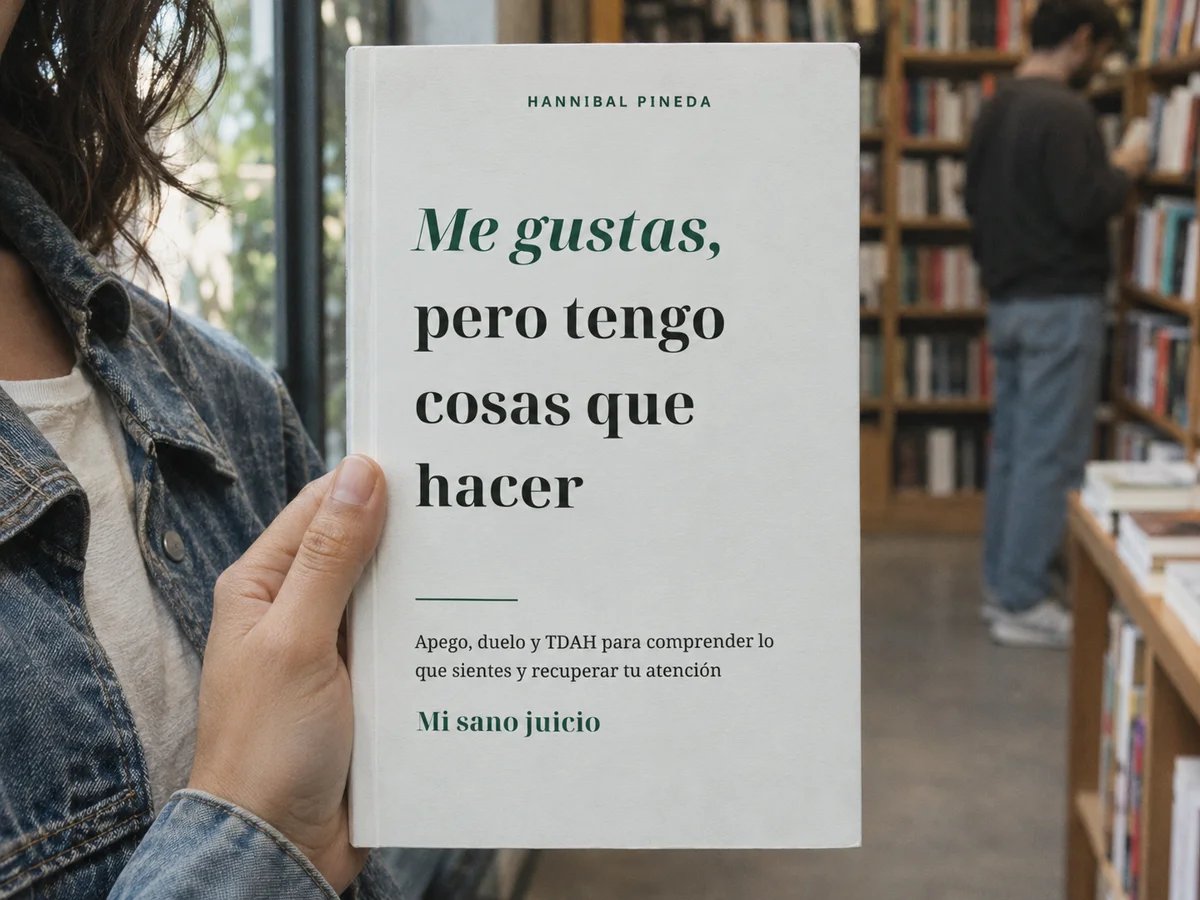
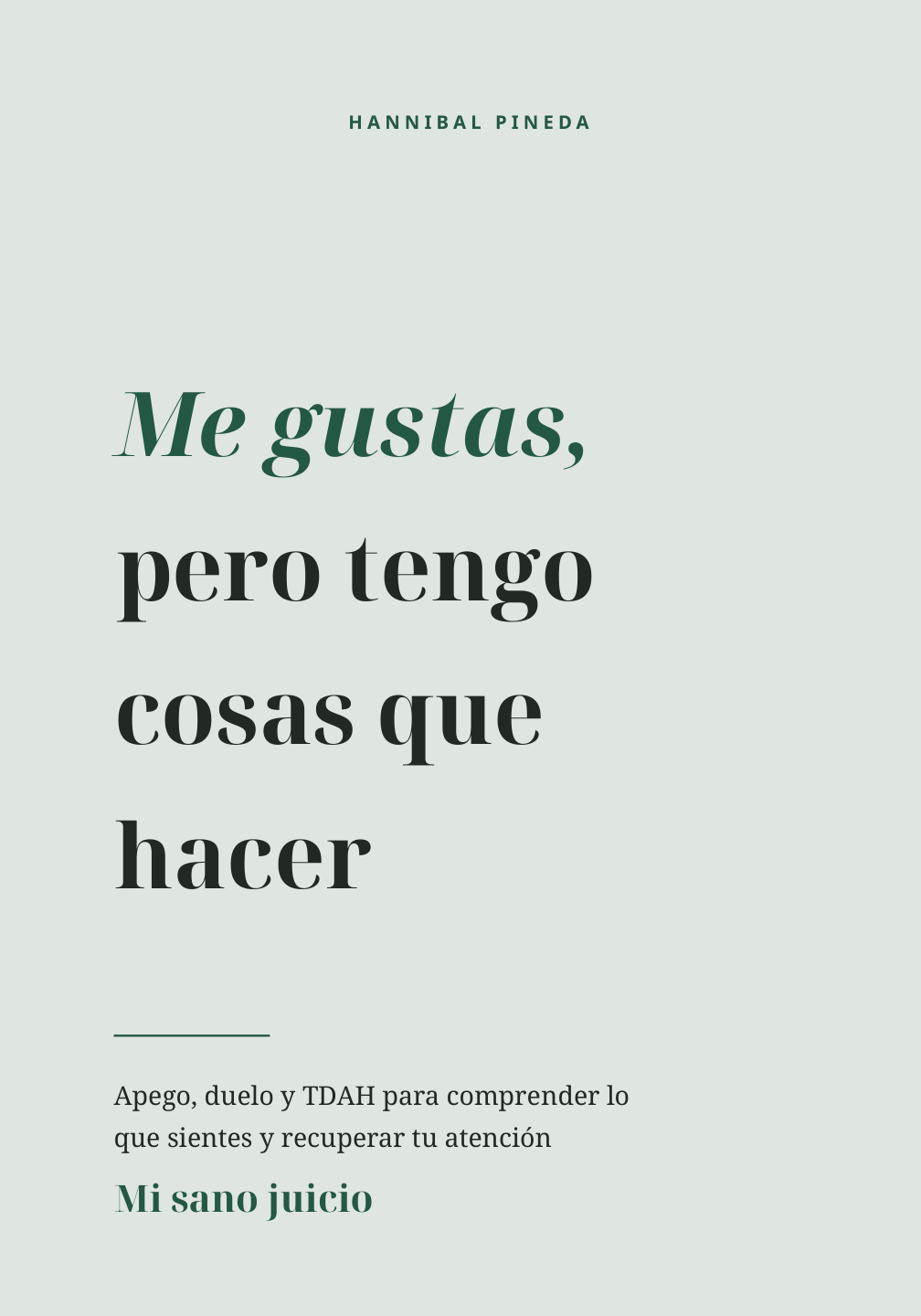
Me gustas, pero tengo cosas que hacer
How much room is left for your own life once someone else’s starts to matter?
Check Amazon for prices and availability in your region.

Amazon and the Amazon logo are trademarks of Amazon.com, Inc. or its affiliates.
I wrote this book about what happens when someone matters to you and your attention begins to revolve around them. I bring together attachment, grief and ADHD to look at that experience more clearly.
What it’s about
Checking your phone, replaying a conversation, or missing someone you chose to leave. I start with those moments and explore how attachment, grief and attention intersect.
Who it’s for
- Anyone who understands exactly what’s happening and still can’t let go.
- Anyone who gets attached quickly and finds it hard to let go.
- Anyone who suspects their mind works differently.
Why read it
I wanted to give you words to separate what happened from what your mind is still trying to work out. The exercises invite you to try a small change in your day.
How it reads
Read in order or start with the topic closest to what you’re going through. You’ll find everyday examples, dry humor and something to try at the end of each topic.
Your host
Hannibal Pineda Psychologist and lawyer
I have a soft spot for the questions left on the table.
I’m interested in the second between “I’m fine” and what you’d say if someone stayed to listen.
I’m Hannibal Pineda, a psychologist and lawyer. I completed a Master of Laws (LL.M.) at the University of San Diego in California. Psychology taught me to listen to how a story takes shape from the inside. Law taught me to ask what we actually know, and what would support our conclusion if someone asked us to revisit it tomorrow.
I bring both disciplines to the microphone. Sometimes I want to ask who taught you to mistrust your feelings. Sometimes I want to know when a doubt became a verdict about who you are. I like when there’s enough humor in the room to talk about heavy things. I’m even more interested in what comes out when we stop filling every silence with advice.
I wrote Me gustas, pero tengo cosas que hacer. I’m curious about what happens to our attention when someone starts to matter to us. The book gives that question room to breathe. Here’s another one for you. When the episode ends, what would you like to be able to say that still feels hard to say today?
Want this to be a place, not just a page?
A community gets built when people ask for it. If you want somewhere to keep the conversation going between episodes, sign up for The Table. When there are enough of us, it opens.
Save my seat at The TableThis is an educational program. It does not provide therapy, psychological services, or legal advice.
Tell me your story
Somebody else has been through this, too.
A story can become the starting point for an episode. Your name stays private, and we’ll always ask for separate permission before using it. Writing here doesn’t commit you to anything.
This inbox is for the show. I review stories as I prepare episodes. If you need urgent help, use the direct support options on this page.
The Table
A community that will tell you what it thinks.
The Table keeps the conversation going between episodes. One question a week about what helped, what didn’t, and how we’re trying to do things differently.
This week’s question
- Speak from experience. Share what you went through. Leave diagnoses to professionals.
- Discuss the idea and respect the person. Challenge each other with respect.
- Keep medical and legal advice out of the conversation. Leave that to qualified professionals.
- Respect what others share here. This week’s vote stays on your device.